
Your Kitchen Table Is a Command Center
For every woman who feels too old, too stuck, too limited to matter—you're wrong. Here's how to build resistance from your kitchen table.

I’ve been getting messages. Dozens of them, actually.
They come late at night, early in the morning, during the hours when fear keeps you awake. They come from women—mostly older women, mostly retired, many caring for someone, many dealing with their own health limitations—and they all say some version of the same thing:
“I’m terrified. I want to help. But I don’t know what I can do. I’m too old. I can’t march. I can’t leave my house easily. I’m taking care of my husband who has dementia. I have mobility issues. I’m just one person. What can I possibly do that would matter?”
Here’s what I want you to know: You’re not asking the wrong question. You’re asking it from the wrong premise.
You think you can’t help because you can’t do what you see other people doing—protesting, organizing, running for office, doing direct action. You think resistance looks young and loud and physically demanding, and since you can’t do those things, you’ve concluded you can’t do anything that matters.
You’re wrong.
The resistance being built right now—the infrastructure that will actually keep people alive when systems fail—is being built by women exactly like you. Women over 60. Women at home. Women with limited mobility. Women caring for spouses or aging parents. Women who think they have nothing to offer.
I know this because I run The People’s Community, a space where people are building mutual aid pods and practicing collective survival. And I can tell you exactly who’s showing up to do this work: it’s you. It’s women who look like you, who have the same limitations you have, who are working from their kitchen tables with phones and notebooks and decades of hard-won knowledge.
While everyone else is spinning or waiting for the right moment or arguing about strategy, you’re building the networks that will matter when everything else fails.
Your kitchen table is a command center. Here’s how to use it.
What You Actually Have That Nobody Else Does
You think you’re limited. I think you’re strategically positioned.
Here’s what you have that most people don’t:
You have time during business hours. While everyone else is at work, you can make phone calls when offices are actually open. You can wait on hold. You can navigate phone trees. You can call back three times until you get someone who can actually help. Most working people can’t do any of that. You can.
You have patience with bureaucracy. You’ve spent decades dealing with Medicare, Social Security, insurance companies, medical billing, government agencies. You know that systems are designed to wear you down, that the first answer is always no, that persistence matters more than charm. You’ve developed the skill of navigating hostile bureaucracies without losing your mind. That’s rare. That’s valuable.
You have institutional knowledge. You’ve raised families. You’ve managed households through crises. You’ve cared for aging parents. You’ve dealt with medical emergencies and financial collapses and systems that promised help and didn’t deliver. You know what questions to ask. You know what red flags look like. You know what actually works versus what sounds good but fails. That knowledge took decades to acquire and it’s exactly what people need right now.
You have a phone and a kitchen table. That’s all you need for most of the work that actually matters. Coordination doesn’t require youth or mobility or money. It requires time, attention, and the ability to keep track of things. You have all of that.
You’re invisible to power. Nobody monitors grandmothers. Nobody sees a 70-year-old woman as a threat. Nobody’s tracking what you’re doing or who you’re helping or what you’re coordinating. That invisibility is enormous strategic advantage. You can build infrastructure that others can’t build because nobody’s paying attention to you.
You’re not too old to help. You’re exactly the right age. You’re not too limited to matter. You’re positioned exactly where you need to be.
What You Can Do From Your Kitchen Table Right Now
This isn’t theory. This is concrete work you can start doing today with exactly the capacity you have.
Be the Phone Person
Many people—especially younger people—have severe phone anxiety. They can’t make calls without having panic attacks. Other people are working during business hours when offices are open. They need someone who can make calls on their behalf.
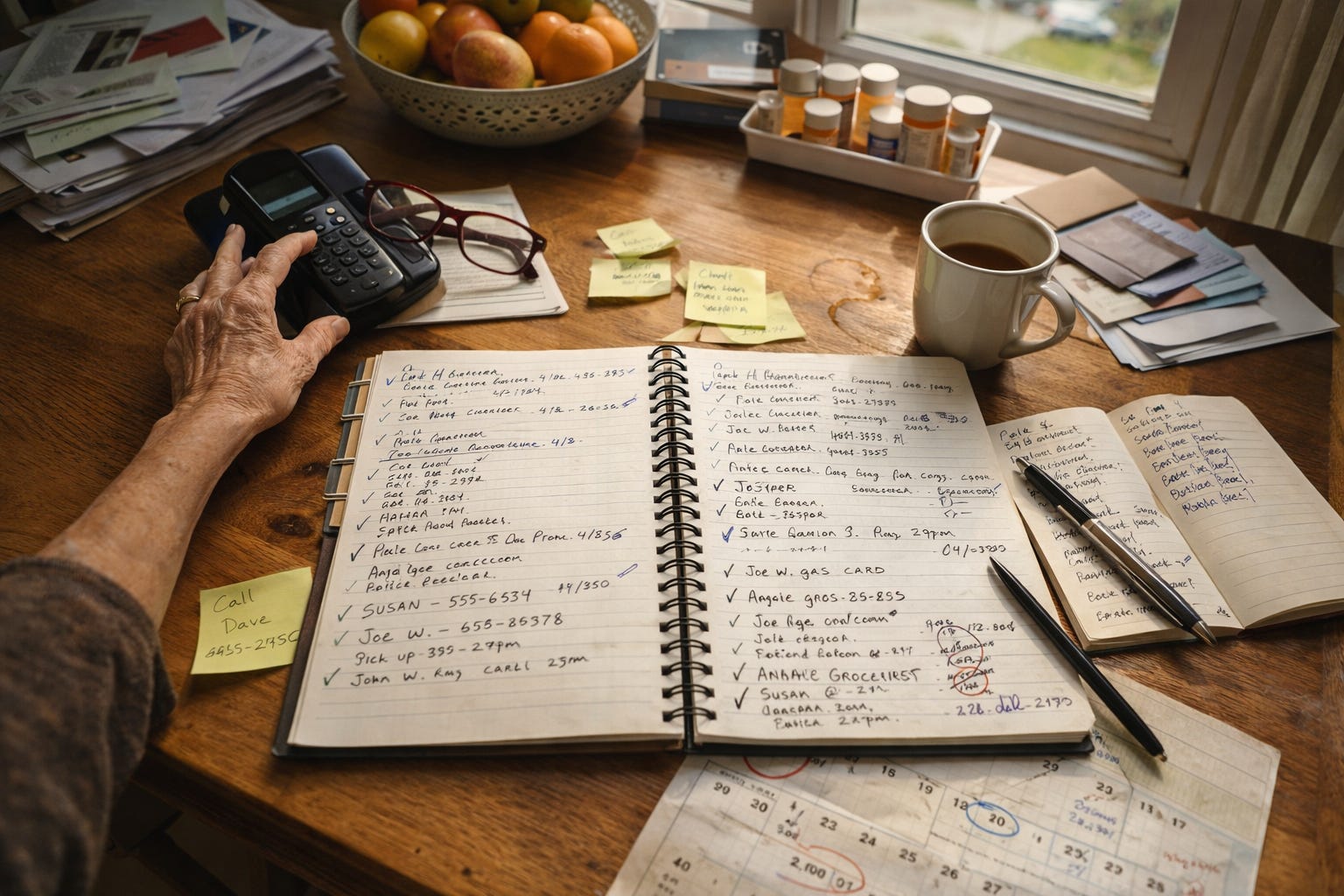
You can do this.
What this looks like:
Someone needs to call their insurance company about a denied claim. You make the call. You navigate the phone menu. You wait on hold. You take notes. You get the information they need.
Someone needs to schedule a medical appointment but the office is only open 9-5. You call and schedule it for them.
Someone is trying to appeal a disability determination. You call the office, find out what documents they need, what the timeline is, who to follow up with.
Someone is dealing with a bureaucracy that’s stonewalling them. You call back. And call back again. And again. You’re retired—you have time to be persistent.
How to start: Tell three people in your life “I have time during weekdays. If you ever need someone to make phone calls for you—insurance, doctor’s offices, government agencies, whatever—I can do that.” That’s it. See what happens.
Research and Compile Information
Someone facing eviction needs to know their tenant rights. Someone applying for disability needs to understand the process. Someone dealing with medical debt needs to know what their options are. Someone trying to navigate Medicare Advantage versus traditional Medicare needs clear information.
You have time to find this information. Most people don’t.
What this looks like:
Spend an afternoon researching tenant rights in your state. Create a simple one-page guide. Share it with people who need it.
Learn the disability application process. Write down the steps, the documents needed, the common reasons for denial. Give this to someone who’s applying.
Research local food banks, rental assistance programs, utility payment help, free medical clinics. Make a list with phone numbers and hours. Share it.
Read through the Medicare handbook and translate it into plain language. Help people understand their options.
How to start: Pick one system you know something about or one problem someone in your life is facing. Spend two hours researching it. Write down what you learn. Share it with one person who needs it.
Be the Memory Keeper
People dealing with crisis often can’t track everything they need to track. They forget appointments. They miss deadlines. They lose track of who said they’d do what. You can track these things for them.
What this looks like:
Keep a simple notebook. When someone tells you they have a doctor’s appointment next Tuesday, write it down. Text them Monday to remind them.
When someone is dealing with a complicated situation—insurance appeal, disability claim, legal issue—track the timeline for them. Write down what happened when, what the next deadline is, what they’re waiting for.
Remember birthdays. Remember check-in dates. Remember to ask “did you ever hear back about that thing you were waiting for?”
Track who in your network can do what, who needs help with what, who has capacity when.
How to start: Get a notebook. Today. Write down three things people in your life are dealing with. Set a reminder to check in next week.
Coordinate From Home
You can’t drive people to appointments. You can’t physically help people move. But you can coordinate who does these things.
What this looks like:
Keep a list of who in your network has a car and might be willing to give rides. When someone needs a ride, you match them up.
Someone needs help moving. You can’t lift boxes but you can call five people, figure out who’s available Saturday, coordinate timing, make sure someone brings a truck.
Someone needs groceries but can’t get to the store. You can’t shop for them but you can text three neighbors, find out who’s going to the store anyway, coordinate them picking up an extra list.
You’re the person who keeps track. Who needs what. Who can help. Who said yes. Who needs to be reminded.
How to start: Next time someone you know needs something they can’t do alone, make three phone calls or texts. Connect them with someone who can help. Write down that it happened. Do it again next week.
Provide Virtual Presence
Someone needs to make a scary phone call but doesn’t want to do it alone. Someone has to fill out overwhelming paperwork. Someone is dealing with something hard and isolation makes it worse.
You can be there without being physically there.
What this looks like:
Someone calls you while they’re on hold with their insurance company. You just stay on the phone with them. You don’t have to do anything—just be there.
Someone is filling out disability paperwork and it’s making them want to cry. You get on video chat and just sit there while they work through it.
Someone has to make a phone call they’re terrified to make. They call you first. You listen while they practice what they’re going to say. Then they make the call and you stay on the line.
How to start: Tell people “If you ever need to do something hard and you don’t want to do it alone, call me. I’ll just be there with you.” See how often that gets used.
Host Coordination at Your Place
If you can’t go out easily but you have space, bring people to you.
What this looks like:
Host a weekly coffee where neighbors can drop in. Just conversation. See what people are dealing with. See what help they need. See who might be able to help each other.
Let people use your kitchen table for organizing meetings. You don’t have to go anywhere—they come to you.
Make your home the place people know they can gather. Not formally. Just: your door is open, your coffee is hot, people can show up.
How to start: Invite three neighbors over for coffee next week. Just to talk. See what happens.
What You Can Do in Your Family
Start with the people closest to you.
Teach the Next Generation How to Navigate Systems
Your kids and grandkids don’t know how to do the things you know how to do. They don’t know how to talk to insurance companies without getting steamrolled. They don’t know how to appeal denied claims. They don’t know how to be persistent with bureaucracies without burning bridges.
Show them.
What this looks like:
Next time your daughter is dealing with insurance, walk her through the call. Show her what to say, how to be firm without being rude, how to get transferred to a supervisor, how to document the call.
Teach your grandson how to organize important documents, how to keep track of medical records, how to make sure nothing falls through the cracks.
Show someone how you manage your medications, how you track appointments, how you stay on top of the administrative work of staying alive. They’ll need to know this eventually.
How to start: Next time someone in your family is struggling with bureaucracy, don’t just help them—show them how you’re helping so they can do it themselves next time.
Share Your Institutional Knowledge
You know things younger people don’t know. Which doctors actually listen to patients. Which government offices are helpful versus obstructive. How to find community resources. What worked when you faced similar problems twenty years ago.

Share that knowledge. Don’t assume people already know it.
What this looks like:
Your granddaughter is pregnant and overwhelmed. Tell her what resources exist—WIC, community health centers, parent support groups. Tell her what you learned raising kids that nobody told you upfront.
Your nephew is trying to help his aging father. Tell him what you learned caring for your parents. What mistakes to avoid. What fights are worth having. What to let go.
Someone is dealing with something you dealt with years ago. Tell them what you learned. What worked. What didn’t. What you wish you’d known.
How to start: Write down three things you know that took you years to learn. Share them with people who need them.
Create Financial Backup Within Family
If you have any financial margin—even small—you can be the person who helps family members avoid disaster.
What this looks like:
Keep a small emergency fund your kids can access if they’re short on rent one month.
Be the person who can loan $200 when someone’s car breaks down and they don’t have it.
Pool grocery money with family members to buy in bulk and reduce everyone’s costs.
If you don’t have financial margin, you can still coordinate who has what and who needs what. You can track informal lending. You can help family members set up their own small emergency funds.
How to start: Ask your kids if they have $500 saved for emergencies. If they don’t, help them figure out how to build it. If you have $500, tell them it’s available if they need it.
What You Can Do in Your Neighborhood
You know your neighborhood better than working people do because you’re there more. Use that.
Know What’s Happening on Your Street
You’re home during the day. You notice things. Who’s struggling. Who’s isolated. Who hasn’t been seen in a while. Who looks like they need help but isn’t asking.
Pay attention. Check in. Connect people.
What this looks like:
You notice your neighbor across the street hasn’t left the house in three days and their mail is piling up. You call them. You check if they’re okay.
You see someone moving in. You introduce yourself. You get their phone number. You tell them you’re around during the day if they ever need anything.
You notice a neighbor struggling to get groceries inside. You offer to help. You ask if they need regular help with shopping.
How to start: Pick three neighbors you see regularly but don’t really know. Introduce yourself this week. Get their phone numbers. See what they need.
Be the Information Hub
You can keep track of things working people don’t have bandwidth to track.
What this looks like:
You know which neighbors have useful skills. Who can fix things. Who has tools. Who knows about plumbing or electrical or car repair.
You know who needs help regularly. Who’s elderly and isolated. Who has young kids. Who’s dealing with health issues.
You connect people. Someone needs their sink fixed and you know the neighbor two houses down is a retired plumber. You introduce them.
You keep track of community resources. Which church has a food pantry. Which clinic has sliding-scale fees. Which program helps with utility bills.
How to start: Make a list of ten neighbors. Write down what you know about them—skills, needs, capacity. Add to it as you learn more. Use it to connect people.
Start a Phone Tree
Low-tech. Simple. Effective.
Get phone numbers for 5-10 neighbors. When something happens—storm coming, someone needs help, information people should know—you make calls. Each person you call agrees to call 2-3 others.
How to start: Text five neighbors. Ask for their phone numbers. Tell them you’re starting a phone tree for the street so people can stay connected and share information when needed. See who says yes.
Coordinate Bulk Buying
You can’t leave easily, but you can coordinate everyone’s grocery lists and have one person shop for multiple households.
What this looks like:
Every Sunday, you collect grocery lists from five neighbors.
One person does the shopping for everyone and drops off orders.
You split bulk purchases to reduce costs.
Everyone saves money and trip time.
How to start: Ask three neighbors if they’d be interested in pooling grocery orders. Try it once. See if it works.
What You Can Do This Week
Don’t try to do everything. Pick ONE thing:
Today:
Tell three people “I have time to make phone calls if you need help with that”
Start a notebook to track when people need help
Text five neighbors and get their phone numbers
Offer to be on the phone with someone doing something hard
This Week:
Make a list of your skills and knowledge
Identify 2-3 people who might need regular help
Research one system someone you know is dealing with
Host one informal gathering at your place
This Month:
Build a relationship with one person who needs regular support
Create one practical guide to a system you know
Coordinate one successful mutual aid exchange
Connect five neighbors who didn’t know each other
The Truth About This Work
This work doesn’t feel like resistance. It feels like:
Making phone calls
Keeping lists
Checking in on people
Coordinating boring logistics
It’s unglamorous. It’s invisible. Nobody will write articles about you. You won’t get recognition. It won’t feel dramatic or important.
But when someone loses their job and needs help navigating unemployment, the person who knows how to do that matters more than anyone at the protest.
When someone is overwhelmed by medical bureaucracy, the person who can make calls and take notes and track deadlines saves their life.
When someone needs help and doesn’t know who to ask, the person who’s been tracking neighborhood capacity connects them to what they need.
You’re not doing nothing. You’re building the infrastructure of survival. It’s quiet work. It’s kitchen table work. It’s phone call work.
It’s exactly what’s needed.
Why This Matters More Than You Think
The infrastructure being built right now isn’t being built by professional organizers or young activists or tech entrepreneurs. It’s being built by women over 60 working from their kitchen tables.
I know this because I see it happening in The People’s Community every day. The pods being formed, the coordination happening, the mutual aid networks growing—it’s your demographic doing this work. Women who are retired. Women caring for spouses. Women with limited mobility. Women who thought they couldn’t help.
You’re not too late. You’re not too limited. You’re not irrelevant.
You’re the backbone. You’re the ones showing up. You’re the ones doing the work that will keep people alive when systems fail.
While everyone else is waiting for someone to tell them what to do, you’re already doing it.
You’re Not Alone in This
Hundreds of women just like you are building this infrastructure right now. From their kitchen tables. With their phones and notebooks. Coordinating help. Making calls. Tracking needs. Connecting people.
You can join them. The People’s Community exists as a space for people building mutual aid pods and practicing collective survival. It’s not an organization—it’s infrastructure. Tools to make coordination easier. Connection to others doing this work. Shared learning.
But you don’t need to join anything to start. You can do this work from exactly where you are, starting today, with the people already in your life.
The resistance doesn’t need you to be someone you’re not. It needs you to use what you have.
Your kitchen table. Your phone. Your time. Your patience with bureaucracy. Your institutional knowledge. Your ability to notice when people need help. Your capacity to coordinate from home.
That’s enough. That’s more than enough.
Start Today
Pick one thing from this article. Do it this week.
Tell someone you can make phone calls for them. Start a notebook. Get your neighbors’ phone numbers. Research one system. Check in on one person. Coordinate one exchange of help.
Just one thing.
Then do another thing next week.
The work builds. The networks grow. The infrastructure develops.
You're not isolated and powerless. You’re part of a growing network of women building the systems that will keep people alive.
Your kitchen table is a command center. Use it.
Note: This article was developed with the assistance of AI tools, guided and curated by human intention. We use AI to help craft clearer, more impactful writing, presentations and videos — so we can spend more time focusing on what matters: building community, sharing knowledge, and advancing ideas that serve the greater good during these urgent times.
Join us online at The People’s Community
There are so many of us who want to help but don’t know how to get started. Thanks for this practical guide.
This really was an excellent read. Thank you.